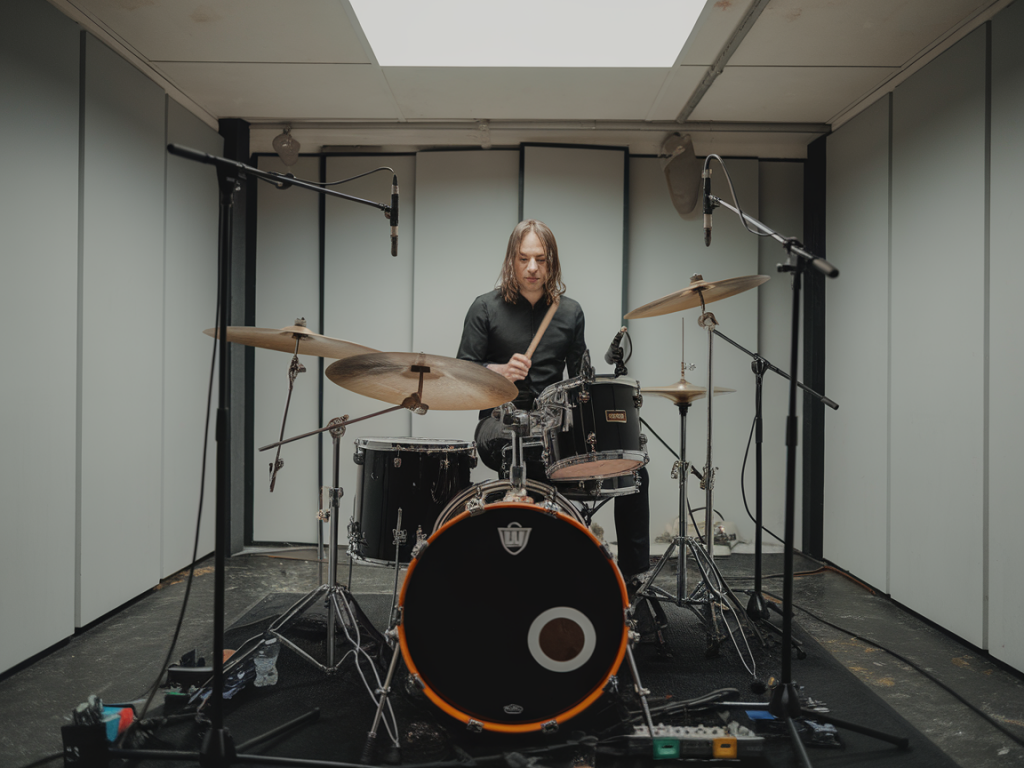
Small live rooms can be a nightmare for drum sounds. I’ve played and recorded in enough cramped venues and DIY rehearsal spaces to know how quickly a kit can turn into an uncontrolled wash of ringing toms and over-sustained snare. Over the years I’ve honed a set of dampening tricks that are fast, reversible, and actually work in a live context — meaning they keep the kit tight without killing the musical vibe. Below I share the exact techniques I use on stage and in tiny studios so you can stop apologising for your drum sound and start owning the room.
First rule: listen and prioritise
Before you reach for tape or Moongel, take 30 seconds to play a few open beats and listen. Is the biggest problem the snare ring, tom sustain, or cymbal wash? In small rooms it’s usually a combination, but one element usually dominates. Focus on fixing the loudest, most distracting ring first — that often improves perceived clarity across the whole kit.
Quick, reversible dampening options I rely on
When I’m setting up for a gig with limited time, these are my go-to fixes. They’re cheap, easy to carry, and won’t permanently alter the drums.
- Moongel pads — small, sticky gel pads that you place on the drumhead. I use one or two on a tom’s contact point to tame high-frequency ring while keeping tone. They’re invisible to the audience and easy to reposition mid-set.
- Gaffer tape (cloth tape) — my kitchen sink. Tear a small square (~1–2 cm) and fold it into a tiny puck to place near a ring on the snare. It reduces overtone without flattening the attack. Use cloth gaffer; it’s easy to remove and won’t leave residue like cheap duct tape.
- Remo Control Ring or Evans O-Ring — cheap, circular foam rings that sit on the batter head to cut ring. I keep one on the spare head in my gig bag so I can swap heads quickly if needed. They give a focused “studio” sound without sacrificing feel.
- Low-tension heads or extra batter pads — swapping to a 2-ply head (e.g., Evans G2) or using a thin control pad on top of an existing head can dramatically reduce bloom on toms for a live set.
- Dental cotton or foam inside the shell — for toms with extreme sustain I stuff a small strip of cotton or foam against the shell interior, under the batter head. It removes ring but stays out of the way of tuning and is discreet on stage.
Snare-specific recipes
The snare is the most fragile live instrument sonically — too much ring and everything sounds sloppy. Here’s how I approach it:
- Quick fix: one small Moongel or a folded gaffer dot placed slightly off-centre on the batter head. This calms ring yet preserves attack.
- Moderate control: install a thin control ring or fit a half-moon felt (common in marching contexts) under the batter head. It keeps sensitivity for rimshots but tames sustain.
- Deep control / studio-style: replace the batter with a coated 1-ply head (e.g., Remo Emperor X), tune slightly lower, and add a strip of reverse gaffer along the edge on the underside to kill harmonics. This yields a thick, punchy backbeat in small rooms.
Toms: keep them punchy without killing tone
Toms can ring like bells in a boxy room. I use a layered strategy:
- Start with one small Moongel pad near the batter’s contact point.
- If more reduction is needed, move to a Control Ring or a fingertip-sized folded towel inside the shell touching the batter head from the rim — it’s subtle but effective.
- For extreme rooms, consider switching batter heads to a 2-ply or adding a mesh-style pad for demos and very loud stages.
Cymbals and hats: damping without deadening
Cymbal wash is the hardest to fix in a small room. I avoid heavy muffling and instead manage playing and mic technique:
- Play lighter over-the-plate touches and use less hard-edged stick technique when space causes too much wash.
- Use smaller cymbals: a 14" hat, 16-18" crash, and careful ride selection can make the whole kit sit better in a tiny room.
- For particularly splashy crashes, I’ll keep a soft towel in my kit bag to lay over the cymbal edge between songs — simple and reversible.
Mic and FOH considerations that complement dampening
Dampening and micing go hand in hand. Tell the FOH engineer what you’ve changed and work together.
- Use close mics with tight cardioid patterns and high-pass filters to reduce room low-mid boom.
- Roll off cymbals and room mics rather than over-damping the kit; sometimes a little EQ at PA will make more difference than more tape on heads.
- If room reflections are awful, ask for a gobos or move the kit away from reflective surfaces — even 20 cm can help.
DIY materials that actually work
Some inexpensive materials are lifesavers and travel-friendly:
- Kitchen sponges cut into strips as internal mufflers.
- Old yoga mat pieces under toms or between kick and floor to reduce sympathetic vibration.
- Velcro-backed felt pads so you can switch dampening quickly during a set.
- Black gaffer and a small pack of Moongel — my minimum kit for any live gig.
What I avoid
There are tempting quick fixes that backfire in a live set:
- Heavy duct tape across full head — it kills the feel and attack, and the sound becomes lifeless.
- Using permanent internal muffles that rattle or shift during transport — they end up causing more problems than they solve.
- Overdamping every element. A little sustain is musical; the goal is control, not absolute silence.
Simple decision table
| Problem | Quick fix (on stage) | Longer-term fix |
|---|---|---|
| Snare ring | Moongel or gaffer dot | Control ring + 1-ply coated head |
| Tom sustain | Small Moongel or folded towel inside shell | 2-ply heads / internal foam strip |
| Cymbal wash | Towel between songs, lighter playing | Smaller cymbals / EQ from FOH |
Finally, remember that dampening is as much about taste as it is about technique. I aim for solutions that keep my dynamic range and musical expression intact. Small rooms force you to play with intention — a slightly controlled kit plus mindful playing can sound better than an aggressively bright set that fights the room. If you want, I can put together a short checklist you can print and stick in your gig bag so you always have the right dampening plan for any small room on the road.