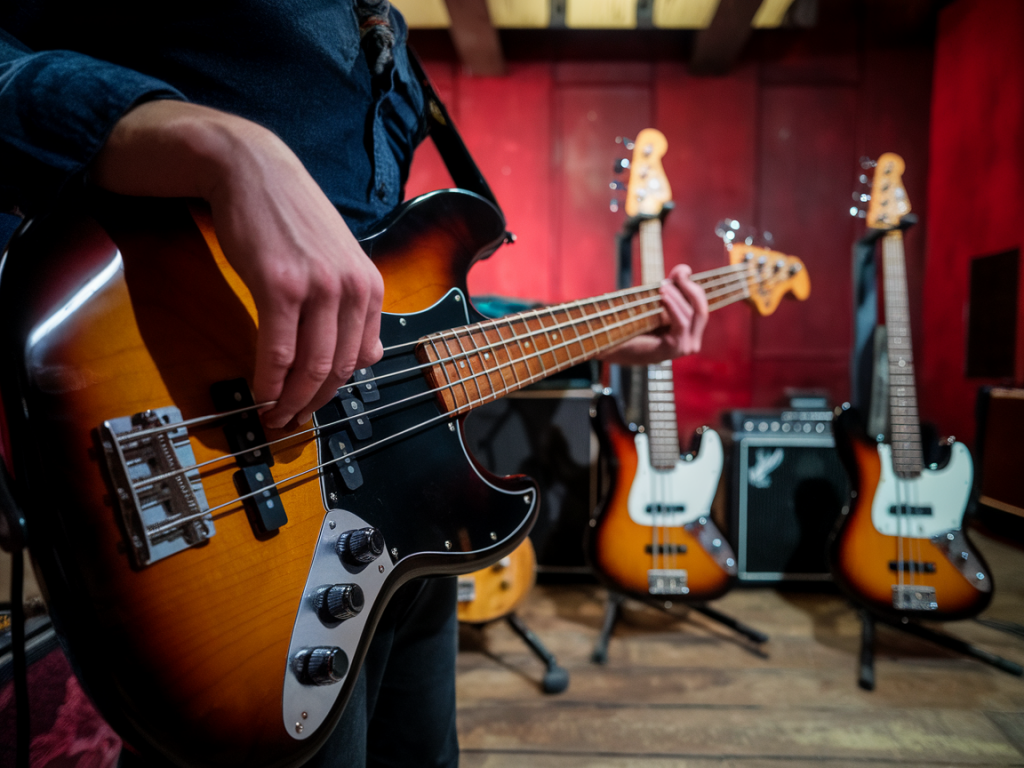
Getting a locked-in pocket for funk and neo-soul isn’t about adding more notes — it’s about making the notes you play breathe, sit with the groove, and serve the song. Below I share five focused practice routines I use with students and in my own practice to develop feel, dynamics, and musical control. These routines are practical, adaptable for drum kit or electronic pads, and designed so you can hear improvements within weeks rather than months.
Why these routines work (and the questions I hear most)
People often ask: “How do I play looser but tighter?” “How do I make ghost notes sound musical?” or “What’s the best metronome setting for funk?” The short answer is: practice with contrast, intention, and context. These routines combine click-based precision, feel-based displacement, dynamic control, and musical phrasing so you learn both the mechanical and musical sides of pocket.
Before you start: always warm up 8–10 minutes with single-stroke rolls, paradiddles and some light time-feel exercises at a comfortable tempo. Use a metronome (I like the sound of the Soundbrenner app or a classic Boss DB-90) and record yourself — hearing your own timing reveals small but important issues you can’t feel while playing.
Routine 1 — The Micro-Delay Metronome (develop late feel)
Purpose: train a controlled “laid-back” feel without losing total time accuracy.
- Set metronome to quarter-note click at a slow-medium tempo (70–90 BPM for neo-soul, 90–110 for vintage funk). Play a basic backbeat: kick on 1 and the “&” of 3, snare on 2 and 4, hi-hat eighths.
- Now delay the click by 10–25 ms. Many metronome apps (Soundbrenner, Metronome by Soundsculptor, or DAW grid offset) let you offset the click. Play along while keeping your snare just behind the click — small, consistent micro-delays create pocket.
- Practice 6 × 1-minute takes, then remove the offset and try to reproduce the same placement without the delayed click. Record to check where your snare sits relative to the grid.
- Progression: reduce the offset until you can consistently sit ~10–20 ms behind the beat while still locking in with bass or backing track.
Routine 2 — Ghost Note Articulation (detail and texture)
Purpose: make ghost notes expressive and readable without muddying the groove.
- Set metronome to 85–100 BPM. Play a simple funk pocket: hi-hat eighths, snare backbeats and two or three ghost notes per bar (e.g. 1e&a 2e&a pattern). Keep ghost notes at -20 to -30 dB compared to the backbeat — physically play them much softer.
- Work in dynamic ranges: play 8 bars with full ghost volume, then 8 bars with exaggeratedly soft ghosts, then 8 bars where you subtly change the ghost volume phrase-by-phrase to imply movement.
- Try varying placement: move ghost notes slightly toward the preceding 16th or toward the following 16th to learn how placement changes feel. Record and zoom in on waveforms to see displacement visually.
- Tip: a light cross-stick or rim-click on some ghost-note slots can add clarity without overpowering the backbeat.
Routine 3 — Phrasing with Space (breath and musicality)
Purpose: learn to use rests and space as musical tools, a key ingredient in neo-soul and pocket funk.
- Choose a loop or create a two-bar groove. Play the groove for 4 bars, then intentionally remove elements for the next 4 bars (e.g., drop the kick for two bars, then drop hi-hat for two bars). Focus on how the band (or mix) reacts to those spaces.
- Practice “call and response” within a 4-bar phrase: play a full groove for 2 bars (call), then play a minimal version for 2 bars (response) using only kick and ghosted hi-hat or snare rim clicks.
- Record a short play-along and edit to loop sections where your minimal phrases sound strongest. Small, deliberate silences can make the next hit mean more.
Routine 4 — Subdivision Control (feel across triplets and 16ths)
Purpose: build deep internal subdivision so you can fluently switch between straight, swung, and half-time feels.
- Cycle through three subdivisions at one tempo: eighths, triplets, and sixteenth-notes. For 90 BPM, play each subdivision for 4 bars. Keep the backbeat consistent while changing the subdivision of hi-hat or ghost notes.
- Add syncopation: play a pattern that alternates subdivisions within a bar (e.g., eighths in the first half, triplets in the second). The goal is a fluid, musical transition — not a mechanical one.
- Use a metronome set to the quarter but mentally subdivide. If you struggle with triplets, practice with a DAW click that includes triplet subdivision to internalize the swing.
Routine 5 — Musical Context Practice (play-alongs & band focus)
Purpose: translate technical improvements into musical results when playing with bass, keys, or tracks.
- Choose three songs (one funk, one modern neo-soul, one stripped-down R&B) and practice the pocket for each. Play along focusing on where the kick and snare emotionally support the bassline and chords.
- Record yourself with only kick and snare for one pass, then only hi-hat and snare for another. Compare how each choice changes the feel.
- Play with a live bassist or an amp’d keyboard, if possible. Real players expose small timing choices — micro-delays, anticipations — that a click can’t simulate. Tighten up with the bass while maintaining the groove for the keys.
Practical tools and setup tips
Some gear and apps speed things up:
- Click apps: Soundbrenner (offset click), Tempo by Frozen Ape (subdivisions), or any DAW for custom offsets.
- Recording: even a phone recording gives useful feedback — aim to listen critically. For session work I like a simple stereo USB mic (Audio-Technica AT2020 USB) and a quick DAW session to zoom in on transients.
- Practice pad / e-pad: use a mesh pad or an Elektron Analog Rytm for playing with dynamics and electronic backbeats. Playing the same routines on pad and kit improves finger control and consistency.
How to structure a weekly practice
| Day | Focus | Time |
| Monday | Micro-Delay Metronome + recording | 30–40 min |
| Wednesday | Ghost Note Articulation + dynamics | 30 min |
| Friday | Phrasing with Space + play-along | 40 min |
| Weekend | Subdivision Control + band or backing track | 45–60 min |
Small, focused sessions beat long unfocused hours. Track progress by simple metrics: consistency of snare placement relative to the grid (use recordings), clarity of ghost notes, and how often other players ask you to “play that again” because it served the song.
If you want, I can create a downloadable 4-week practice plan based on your current level (beginner, intermediate, advanced) and preferred tracks to practice with. Tell me your tempo comfort zone and whether you work more on acoustic kit or pads, and I’ll tailor it.