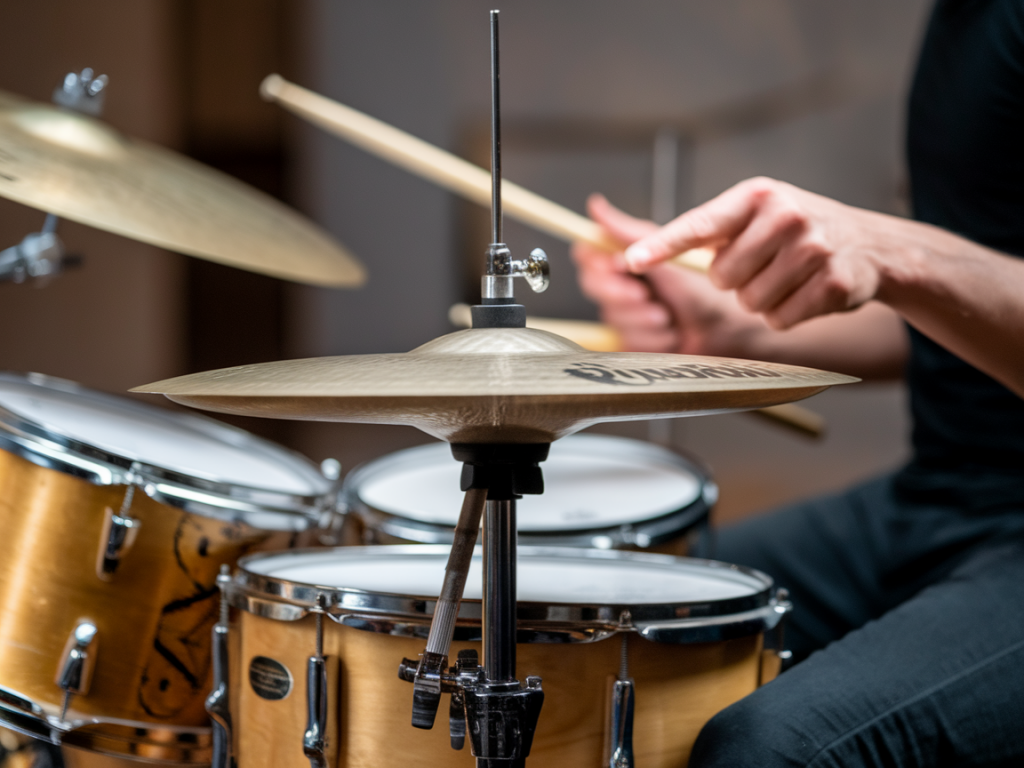
I want to talk about the small hi-hat choices I reach for in sessions when the goal is to add groove and color without crowding the mix. Those tiny articulations — a slightly tipped tip, a half-open “sizzle,” a controlled foot chick, or a whispered bell — are what separate a bland comping track from something that breathes and sits perfectly with vocals and synths. Below I share the articulations I use most, why they work, how I execute them and how I think about them in a mix.
Why subtle hi-hat articulations matter
In session work, the hi-hat is often competing with vocals, guitar tops, keyboards and percussion. If you overplay or use a bright, constant sound, it can mask important elements or push the groove forward in the wrong way. Subtle articulations let you provide pulse and movement while leaving space for the arrangement. They’re about timbre, placement and dynamics: the right tiny click or whisper can make the pocket feel deeper without adding bandwidth that fights the rest of the track.
Articulations I rely on
Here are the specific articulations I use most and the musical contexts where they shine.
Tip on the edge (soft) — a warm, woody tick that sits low in the midrange. Great for mellow pop, singer-songwriter tracks and anything that needs a human, organic touch without bright sizzle.Tip on the bow (brighter, balanced) — slightly brighter than the edge but still controlled. Works well for rock-pop that needs clarity but not harshness.Near-closed “half-hat” — one of my favorite session moves: leave the hi-hat only a few millimetres open so you get a short air and partial wash on the off-beat. Adds breathing room and groove without ringing out.Short open (50–100 ms) — controlled single open hits, closed quickly with the stick or foot. Use sparingly to accent transitions or to add emphasis in choruses.Foot chick variations — soft, syncopated foot chicks can act as a ghost-note on the hi-hat lane. Lower frequency footprint than stick hits; excellent when the vocal sits in the top end.Bell and bow shading — light bell taps for adds and color. The bell’s frequencies are more focused and can sit through a dense mix if used sparsely.Stick-side (riding on the butt or shoulder) — yields a paper-thin, dry sound for intimate tracks or lo-fi aesthetics.Brush or rod on hats — for acoustic, low-volume sessions where dynamics are key. Produces texture without high-frequency sizzle.How I execute these articulations — technique tips
Execution is more than choice; it’s detail. A fraction of an inch in stick placement, a new wrist angle, or a touch of damping can change the whole vibe.
Stick placement — move between the tip, shoulder and butt. The tip on the bow gives clarity; on the edge it becomes woody. Practice switching mid-bar to hear the contrast.Stick angle — tilt the stick to reduce surface contact and create a thinner, less bright attack. This is subtle but powerful in a dense mix.Control the open time — for half-open or short open hits, practice muting the hat with the heel of your hand or quickly closing with your foot. Aim for consistent open durations (use a metronome and count ms mentally at first).Foot dynamics — the chick volume should be measured. I practice foot chicks with a click on different subdivisions so the sound becomes part of the pocket, not a separate element.Ghosting around the hi-hat — tiny stick taps around the main pulse add motion. Keep them at very low velocity; they should be felt more than heard.Practical drills to build control
These short exercises translate quickly to sessions.
Play steady quarter-notes with the tip on the edge, varying only the dynamic between bars (pp to mf).Set metronome to 90 bpm. Play eighth notes as half-open hats for four bars, then close for four bars, focusing on identical placement. Repeat 10 times.Work 16th-note ghosting: play a backbeat, add a hi-hat on the 1 + 2 + 3 + 4 + with the stick tip quiet on the +. Keep those +s at meter-level velocity 20–30% of the main beats.Foot chick placement: play a simple groove and place a soft foot chick on the “&” of 2 and the “&” of 4. Record and listen back to ensure it sits behind the snare in the mix.Mix thinking — how to keep hi-hats from cluttering
What you play and how you mic/process it matter equally. In sessions I always think: frequency, timing and stereo. Here are my go-to mix tactics.
EQ for presence, not harshness — roll off below 200–250 Hz to remove low thump, then gently cut harsh build-ups around 3–6 kHz if the hat is too brittle. Add a slight boost around 10–12 kHz only if you want extra air.Parallel compression — send a duplicate to heavy compression and blend in for body without adding click. Useful when you want fullness from a closed hat without the transient spike.High-pass the hat bus — keep low mids free for kick/snare and guitars. Hats should live above the lower mids unless you’re going for a distinctive band sound.Stereo placement — keep main hi-hat centered or slightly off-center. Use subtle Haas or stereo widening only if it doesn’t interfere with vocal clarity.Automation — automate hat level through sections: bring it down under a verse vocal, lift slightly for the chorus. This simple move keeps space without changing your playing.Gear notes that help make subtle articulations sing
Cymbal choice and stick selection affect subtlety a lot. Here are a few favorites and why I use them in session carts.
| Item | Why I use it |
| Zildjian K Custom Hybrid (hi-hat) | Dark bow with a clear bell — great for controlled, musical articulation that sits in mixes well. |
| Sabian HHX Evolution (hi-hat) | Warm, slightly trashy edge ideal for half-open textures and controlled sizzle. |
| Vic Firth American Classic 5A / lighter sticks | Lighter sticks help with finesse; use 7A when you need even softer touch or rod brushes for whisper textures. |
| Cloth or gaffer tape | Small damping for reducing sustain on open hits without changing stick feel. |
Examples from sessions (what I actually choose)
On a singer-songwriter session last month I rode a K Custom half-open with light foot chicks on the & of 2 and & of 4. The hat was high-passed at 300 Hz and sat -3 dB under the vocal. For an R&B ballad I used a thinner 7A and played the hat on the bow with ghosted 16ths; I doubled the hat into a parallel chain with heavy compression to get weight without transient smear. On a synth-pop track I used the bell for fills and kept the main pattern small and centered — the bell acted as the color without pulling energy from the lead synth.