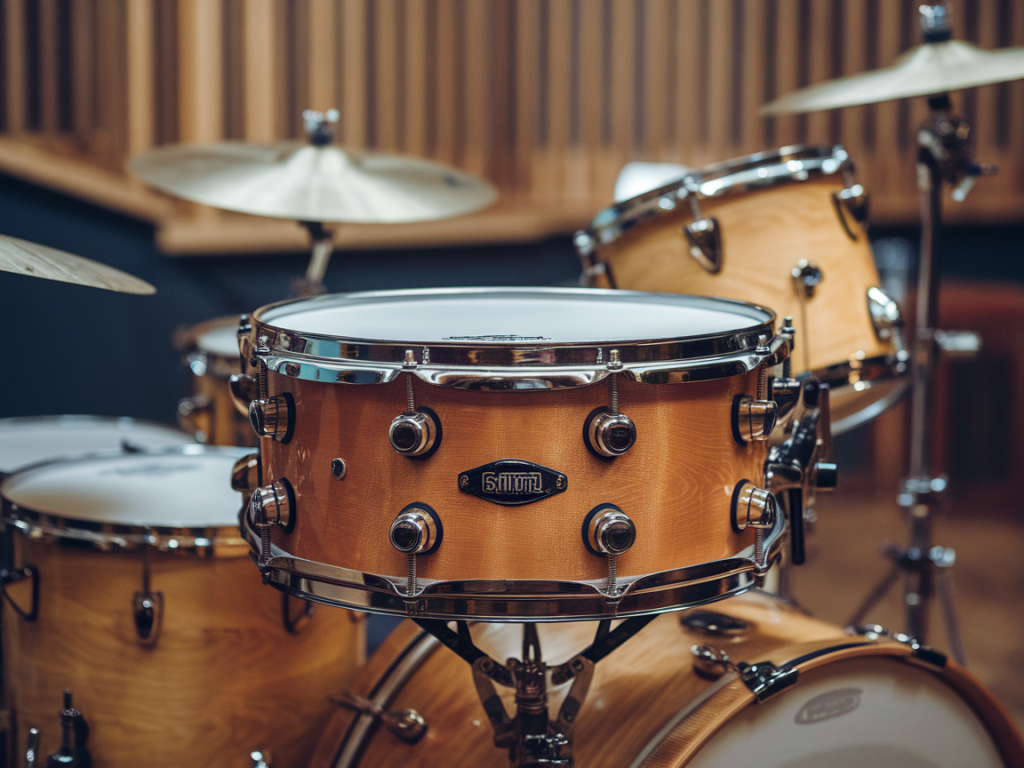
I love a snare that sounds wide, warm and roomy without getting washed out — that fat, three-dimensional tone that sits nicely in the mix and still cuts through when it needs to. Over the years I've had to find ways to capture that vibe when I'm working with limited resources: small rooms, minimal mics, or clients who want a quick setup. In this article I’ll walk you through how I get a big-room snare sound using only a few mics and a single reverb send. These techniques translate well whether you’re tracking in a home studio, a small rehearsal room, or a big-ish live room with limited mic channels.
Why minimal mics and one reverb send?
Less can be more. Fewer mics means fewer phase issues, faster setup, and more focus on source tone and placement. One well-configured reverb send gives you a consistent space that you can shape without muddying the close snare feel. Also, many projects don’t have the luxury of 16 mic channels or a dedicated drum booth, so these approaches are practical and musical.
My basic signal chain
Here’s the simple chain I use when I want a fat room snare with minimal mics:
Mic choices and placement (practical options)
You don’t need exotica — a classic Shure SM57 or Sennheiser MD421 on top and a pair of AKG C414s as room mics will get you very far. I often reach for:
| Close mic | Shure SM57, Sennheiser e609, Electro-Voice RE20 |
| Room mics | Royer R-121 (ribbon), AKG C414, Rode NT5, Beyerdynamic M160 |
| Reverb | Valhalla VintageVerb, Lexicon PCM (hardware), UAD EMT 140 emulation |
Placement details:
Phase and balancing — the most important part
No matter how good your mics are, phase cancellations will kill the fatness. I always check phase between close snare and each room mic. Here’s a quick workflow:
Small adjustments in phase/time can radically change body and snap. Trust your ears — you want the room mic to add mass and ambiance while preserving the transient attack from the close mic.
EQ and dynamics: sculpt before reverb
I generally process the close snare and room mics separately before they hit the reverb send. My goal is to shape the character so the reverb complements it rather than hides problems.
Choosing the reverb and dialing it in
For a fat room snare I want a reverb that gives warmth and decay without a huge slap that clashes with the close attack. Plate reverbs and short-to-medium halls work brilliantly.
Blending reverb with minimal mics
Since we only have one reverb send, the trick is to use it as the tonal glue. I usually route both the close snare and the room mics to the same send, but at different send levels:
Compression on the reverb bus can make the tail more present and thick. A gentle compressor (2:1–3:1, slow attack, medium release) with a couple dB of gain reduction helps the reverb sit forward without pumping.
Automation and context
Once I have a basic snare sound, I listen to it in context with the rest of the kit and the song. Two small automation tricks I use:
Quick troubleshooting
If your snare sounds thin or washed, check:
If the snare is too dry and lifeless:
Getting a fat room snare with minimal mics is about intention: pick the right mics, place them deliberately, respect phase, sculpt before the reverb, and use a single, well-tuned reverb as the glue. When you strip things back, you reveal what really matters — the drum’s tone, the room’s character, and the interaction between direct attack and ambiance. Try these steps next session and tweak them for your room and music; you’ll be surprised how much presence you can achieve with very little gear.