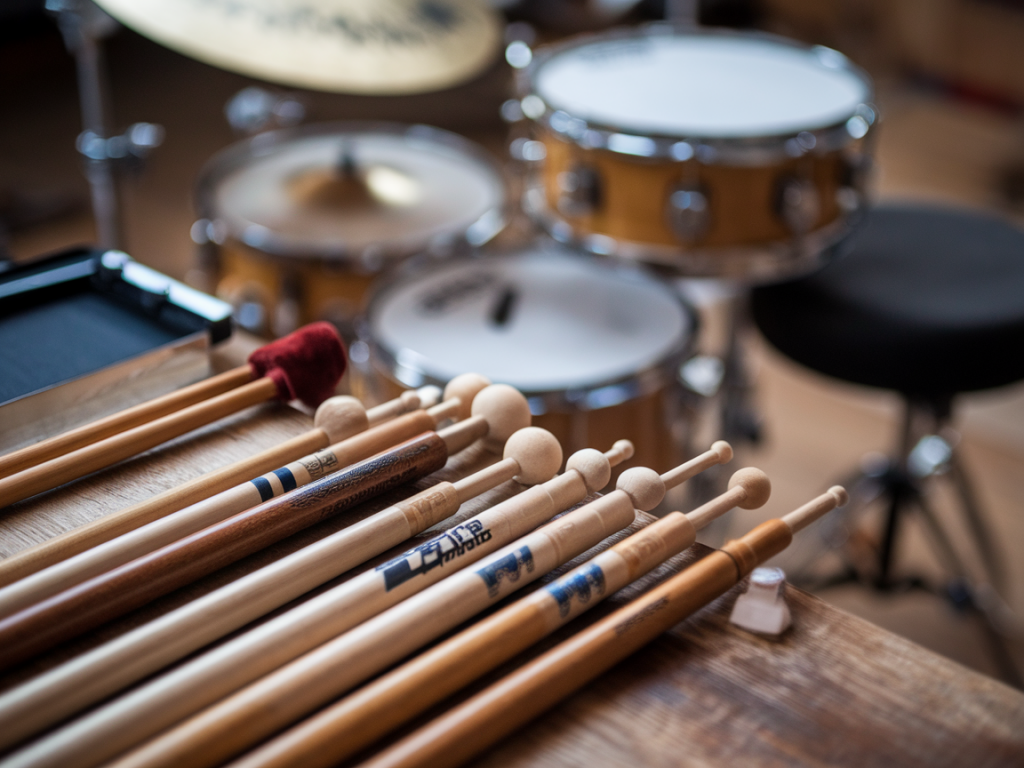
I used to think picking drumsticks was all about length and weight — longer sticks for reach, heavier sticks for louder playing. Over the years, both in lessons and studio sessions, I've found a different truth: the shape of the tip often changes the story more than millimetre differences in length or an ounce or two of mass. Tip shape affects attack, articulation, cymbal response and how dynamics translate from your hands to the kit. If you want more control over soft-to-loud transitions, better ghost-note clarity, or a different cymbal shimmer, try starting with tip shape before you start obsessing about length or diameter.
Why tip shape matters
Tip shape determines how the stick contacts a surface. A round tip concentrates energy into a smaller contact area — giving a bright, focused attack and often more articulate stick definition on snare. A barrel or acorn tip spreads the energy out, producing a fuller, warmer sound with less pronounced high-end. Nylon tips reflect more high-frequency energy, often making cymbals sizzle and accents pop; wooden tips absorb and blend, giving a more natural, rounded tone.
From a dynamics perspective, tip shape controls perceived volume at lower playing intensities. A smaller contact point (round or teardrop) will cut through with less force, which means you can be quieter yet still audible — very helpful for ghost notes, brush-like control, and required subtlety in acoustic or low-volume contexts. Conversely, larger, flatter tips require more energy to sound present, which can be perfect for big, supportive backbeats where warmth and body are needed over top-end detail.
How tip shape affects cymbals, snare, and toms
- Ride cymbals — Round and tapered wooden tips give a clear ping and defined stick articulation. Nylon tips make the bell pop and add brightness; they're useful if you want ride clarity at low volumes without forcing your stroke.
- Crash cymbals — A fuller, blunter tip (like barrel or acorn) produces a thicker crash with less harsh attack. If you're chasing a fast, cutting crash for pop/rock, a smaller tip can make the initial attack more pronounced.
- Snare drum — For ghost notes and delicate snare work, teardrop or round tips provide precise articulation. For a fat, big backbeat, consider an acorn or barrel tip to distribute the energy and give more body.
- Toms — Tip shape plays a role, but head tuning and stick rebound still dominate. Barrel tips can warm out tom tones, whereas tapered tips will emphasize attack for quicker note definition.
Practical listening tests I use with students and in the studio
When I introduce tip shape as the main variable, I run a few quick, focused tests. These are the drills I use to hear differences immediately:
- Soft single-stroke paradiddle across snare at pp to hear ghost-note clarity.
- Ride bell and bow at mf to compare bell cut-through and wash.
- Slow crash accents at f to check attack vs. sustain.
- Play a simple groove at mp and then crescendo to f to feel dynamic control and how the tip carries from soft to loud.
Give each tip shape 30–60 seconds of focused playing. You’ll notice the tip reveals or hides harmonics, offers different rebound perceptions, and changes how much energy you need to apply to be heard.
Common tip shapes and what I use them for
| Tip Shape | Character | Best For |
|---|---|---|
| Round | Clear, focused high-end; precise articulation | Jazz ride clarity, ghost-note heavy snare work |
| Teardrop | Warm attack with pronounced body | Versatile contexts where both cymbal and drum definition are needed |
| Barrel / Acorn | Full, warm tones with less bite | Rock backbeats, tom-heavy grooves, crash fullness |
| Nylon (round/oval) | Bright, cutting high-end; pronounced bell on rides | Pop, funk, situations needing ride clarity at low volumes |
How tip shape interacts with other variables
Tip shape doesn’t exist in isolation. It's easiest to experiment with tip shape after you’ve chosen a comfortable stick length and taper — but before you lock into a particular weight. Here are a few interactions to keep in mind:
- Taper — A longer taper increases rebound and makes the stick feel lighter; combined with a small, round tip it creates an extremely articulate, responsive stick ideal for jazz and brushless subtlety.
- Diameter — Thinner sticks feel faster and more precise; paired with a small tip they are excellent for nuanced dynamics. Thicker sticks with larger tips give weight and presence for louder styles.
- Material — Hickory remains the most common all-rounder. Maple is lighter and works well with small tips for ultra-quiet detail. Oak increases mass and pairs nicely with barrel tips when you need chunky attack.
Brand and model suggestions to try
I often recommend students try a few specific models so they can hear differences quickly. Here are sticks I regularly use or suggest, across tip shapes and materials:
- Vic Firth American Classic 5A (wood tip) — Classic round-ish tip, versatile for a lot of styles.
- Zildjian 5A Teardrop — Great balance of warmth and definition; useful if you want one stick that does everything.
- Promark TX499W (hickory, acorn) — Warmer, fuller attack; excellent for rock and funk where body matters.
- Vic Firth American Classic 5A Nylon — For bright ride articulation and studio tracking where cymbal presence is crucial.
- Meinl Marathon Series (maple) — Lighter sticks with small tips for delicate dynamics and extended playing.
Tips for choosing in a store or before ordering online
- Bring your usual sticks for comparison so you can instantly hear and feel the difference.
- Try the same make/diameter with different tip shapes rather than jumping across lengths and weights — isolate the variable.
- Record a short groove on your phone so you can A/B the tones — what you hear in the room can differ from what records well.
- If you play electric or hybrid kits, include cymbal samples in your test because tip shape will translate differently through speakers.
In both teaching and sessions, the most satisfying moments come from tiny adjustments that make playing feel easier and music sound clearer. Swapping tip shapes is one of those low-effort, high-impact changes — and it’s often the quickest route to better dynamic control and musicality. If you want, tell me what sticks you use now and the musical context, and I can suggest two or three tip shapes to try next.