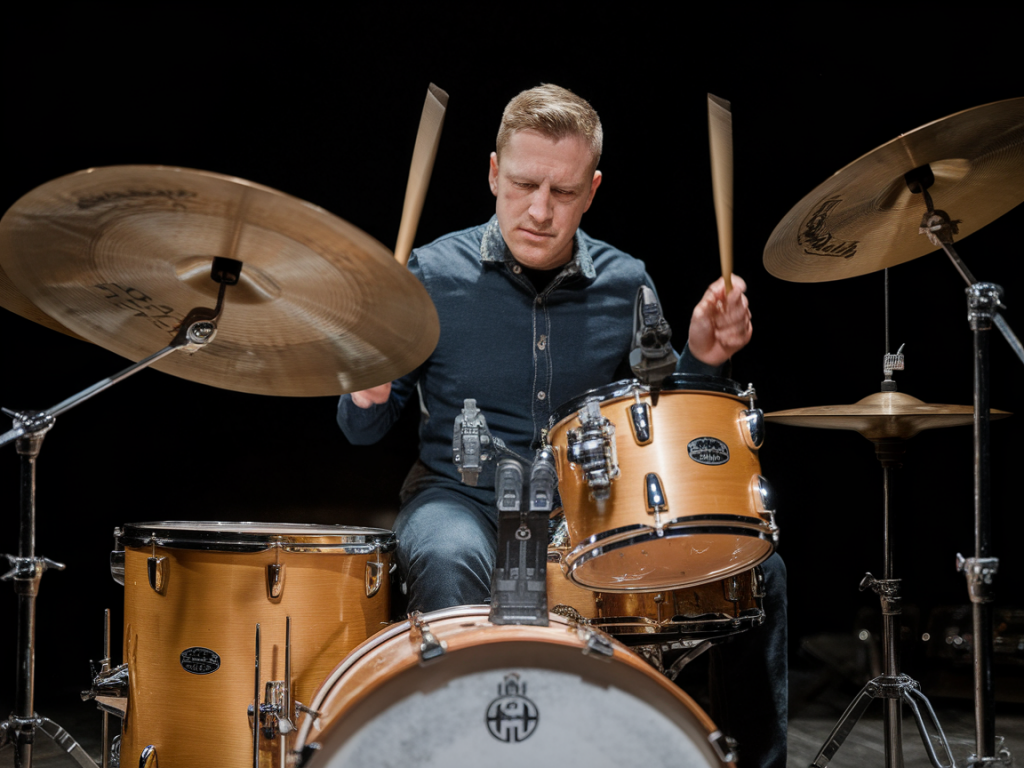
I want to talk about the pocket — that sweet place where time feels effortless, the band breathes together and your groove becomes undeniable. Over the years I’ve found that a focused, short routine using paradiddles can sharpen both timing and feel faster than hours of unfocused metronome work. Here’s a 10-minute paradiddle routine I use with students and in my own warm-ups to extract the pocket: practical, repeatable, and musical.
What I mean by "the pocket"
When people ask me what the pocket is, I describe it as the intersection of steady time, relaxed dynamics, and musical placement of accents. It’s not just about being on the click — it’s about where you sit relative to the pulse and how you shape subdivisions so the groove breathes. Playing "in the pocket" makes a track feel locked; it gives other musicians something to play against.
Why paradiddles?
Paradiddles are an incredible tool because they alternately place accents in different positions across the beat, forcing coordination and phrasing in both hands (or limbs when expanded to kit). A paradiddle-based routine teaches you control of micro-timing (where accents sit inside the subdivision), helps with dynamic contrast, and improves the ability to move accents around the kit — all critical to finding the pocket.
How to use this routine (10 minutes)
Set a metronome to a comfortable tempo for the first run — typically 60–80 bpm for whole note feel with subdivision focus. Use two different metronome sounds if your app allows one for the downbeats and a softer one for subdivision clicks. I use the Soundbrenner app or a simple DAW metronome. The routine is built as four 2.5-minute blocks you can loop as needed.
| Block | Time (min) | Focus | Instruction |
|---|---|---|---|
| Block A | 2.5 | Single paradiddle, even dynamics | R L R R / L R L L across snare; play at 8th-note subdivision, accent first note lightly |
| Block B | 2.5 | Paradiddle with displacement | Shift accent to second or third note inside the grouping; count out loud |
| Block C | 2.5 | Accent mapping around kit | Move the accent to bass drum, hi-hat, ride or toms; keep subdivisions steady |
| Block D | 2.5 | Musical application | Turn the pattern into small grooves with snare on 2+4 and ghost notes |
Block A — Foundation: perfecting the feel
Start with simple single paradiddles on snare using consistent stick height. Metronome: click on the quarter note, play paradiddles as straight eighths. Count "1 & 2 & 3 & 4 &" and play R L R R / L R L L across the &s so that accents fall where you decide. For the first minute, keep dynamics even and aim: 90–95% comfort — not full power. This builds evenness and internal subdivision.
Tips:
Block B — Displacement and micro-timing
Now shift the accent inside each 4-note paradiddle. For example, accent the 2nd note of each paradiddle grouping (R l R R). This tiny change forces you to re-place your weight and makes you aware of how accents sit relative to the beat. Use a softer click on the subdivision if possible — your ear should feel where the accented note "pulls" in front of or behind the metronome.
How to practice displacement:
Block C — Accent mapping across the kit
Take that accent and place it on different kit voices. For example:
This block is crucial: many drummers can play paradiddles on the snare but struggle to translate those accents around the kit while maintaining time. Keep the metronome steady and prioritize placement over volume. The goal is to make the accent feel "natural" on each surface.
Block D — Musical application: grooves and pocket
Now use the paradiddle material to build small grooves. Examples to try (play each variation for one minute):
Always finish this block by recording a 30–60 second groove and listening back with headphones. Listen for timing relative to the click and the musicality of the accents.
Metronome settings and progressions
Start slow (60–80 bpm) for accuracy. After a week of daily 10-minute sessions, increase the tempo in 4–6 bpm increments. I also recommend practicing the same routine with a half-time metronome or with the metronome on the off-beats to challenge your internal clock. Use apps like Metronome by Soundbrenner or the click in Logic/Pro Tools. When you can comfortably displace accents and translate them around the kit at 90% of your target tempo, increase the tempo.
Common problems and quick fixes
If your accents are moving the pulse instead of sitting in it:
If your hands get uneven:
Gear and environment tips
You don’t need a full kit to benefit: a practice pad and a metronome suffice. That said, practicing on a snare and playing accents around the kit helps transfer the motion to music. I like to use a small condenser microphone and record short takes into my phone or a Focusrite interface so I can review feels later. If you have electronic pads (Roland SPD-SX, Alesis Strike), use those to map different sounds to accents and get instant feedback.
Daily plan example
If you only have 10 minutes per day:
Repeat this five-day cycle and at the end of the week measure progress: are your accents more consistent? Does your recorded groove "sit" better with the click? If yes, you’re extracting the pocket.
If you want more detailed transcriptions or a video breakdown of this routine on Dmdrums Co, check https://www.dmdrums.co.uk — I post follow-up lessons and practice tracks that match this exact workflow. Keep it small, specific and musical — that’s how real change sticks.