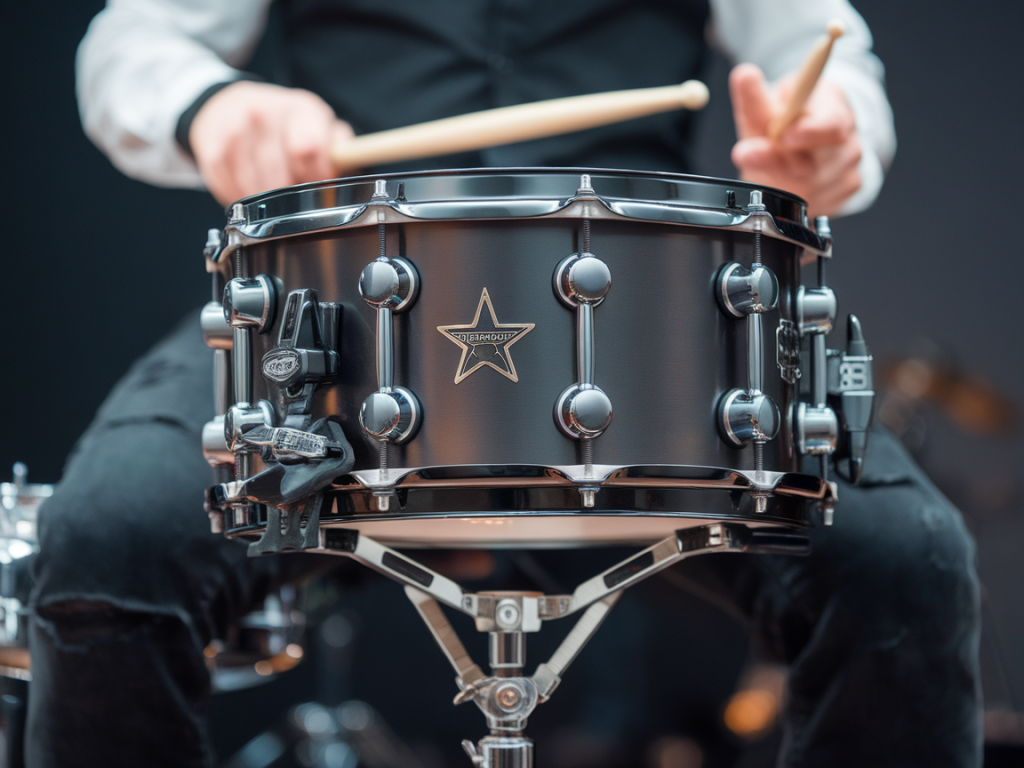
I get asked a lot how I dial in a Ludwig Black Beauty for modern pop. It’s one of those snares that can sound cinematic, dry, fat, bright or anything in between depending on what you pair it with — heads, tensions and damping make all the difference. In this article I’ll walk you through the practical steps I use in the studio and on stage to achieve a warm, present pop snare that cuts through the mix without getting muddy.
Why the Black Beauty works for pop
The Black Beauty’s shell (usually 6.5x14 brass) gives you a natural warmth and low-mid presence that sits beautifully under vocals and synths. The metal shell has a complex overtone series — it’s richer than a super bright steel snare but livelier than copper or wood. That’s why you can push it towards a modern pop sound without losing body.
That said, the raw shell can be too resonant for tight pop mixes. The job of tuning and damping is to preserve the warmth and body while controlling ring and unwanted low-frequency build-up. I focus on three areas: the batter head, the resonant head, and damping choices. Below I explain my go-to combinations and step-by-step process.
Batter head choices and tuning approach
For modern pop I generally want a focused crack with enough body to feel full on backbeats. My favorite batter head choices:
My standard starting point: a coated single-ply (Ambassador) for warmth and feel. Tune it slightly higher than you might think — modern pop snares often sit in the 7–9/10 tension feel range depending on hoop and threads — but don’t crank it so hard that the shell loses body. The idea is to get a crisp articulation (for snare clicks and backbeat) while preserving the low-mid of the Black Beauty.
Resonant head selection and tuning
The resonant head is where you gain snap, sizzle and overall sensitivity for ghost notes and rimshots. My go-to resonant heads:
For pop, I usually choose a thin clear resonant and tune it fairly high — higher than the batter by a noticeable margin. This gives a tight, articulate snare wire response and helps the backbeat cut. Typical tuning relationship I use in the studio:
| Component | Starting tension (feel) | Result |
|---|---|---|
| Batter (coated Ambassador) | Medium-high — firm but not glass-tight | Warm attack, body intact |
| Resonant (thin clear) | High — noticeably tighter than batter | Sharp response, quick decay, pronounced snap |
That higher resonant head tension helps the snares articulate quickly. If the resonant is too loose relative to the batter you'll get a woolly, uncontrolled sound with too much sustain — not what you want in modern pop.
Damping strategies: keep warmth, lose the mud
Controlling low-end bloom while preserving body is the trick. Here are damping options I use, ranked from minimal to aggressive:
My preferred starting point for pop is minimal: a small Moongel or a thin external ring positioned off-center. This tames the annoying ring without sucking all the life out of the shell. If we’re tracking with tight low-end heavy elements (sub-bass, synths), I’ll add a single strip of gaffer in the center to tame the mud further.
Snare wires and throw-off
The wires make or break the articulation. For modern pop I like crisp, even snap with minimal sympathetic rattle:
On a Black Beauty I often use 20-strand stainless or a hybrid wired set and set the tension so the wires respond immediately but don’t choke the shell. Make sure the throw-off is smooth and that the wires are centered on the resonant head. If there’s uneven buzz, check the wires for bends and the seating of the butt plate.
EQ and mic placement tips for tracking
Even with great tuning, a little selective processing helps get the snare into a pop mix fast:
Quick reference tuning table (starting points)
| Head | Tension feel | Damping |
|---|---|---|
| Coated Ambassador (batter) | Medium-high (firm) | Small Moongel off-center |
| Thin clear Ambassador (resonant) | High (tight) | None or light tape under one quadrant |
| Wires | 20-strand stainless, medium tension | Centered, not over-tight |
Final workflow I use in sessions
There’s no single perfect setting — room, mic choice and the rest of the arrangement change what’s needed. But with the Black Beauty I aim to preserve that warm brass body and then use a tighter resonant head plus minimal damping to give modern pop clarity and punch. If you want, tell me your studio headstock and mic setup and I’ll suggest exact tensions and damping placements for your rig.