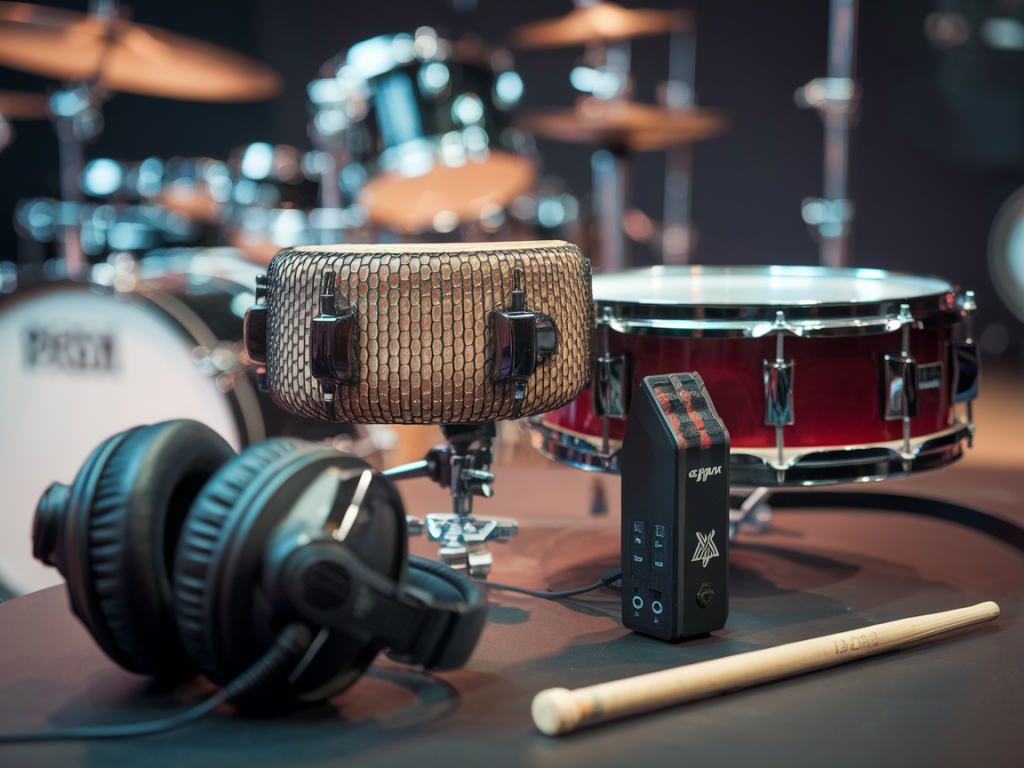
I’ve been running hybrid kits for years — acoustic shells fitted with mesh heads and pads feeding into modules like the Roland SPD‑SX or Alesis Strike — and one recurring annoyance is double‑firing: a single stroke registering as two hits. It’s frustrating in the middle of a take or a live show, and because mesh heads and piezo triggers are so sensitive, the fixes aren’t always obvious. Here’s a practical, experience‑based walk‑through of what I try first, what to change in the SPD‑SX, and the mechanical tweaks that actually stop double‑triggers without killing dynamics.
Why mesh heads double‑fire (in plain terms)
Double‑firing usually comes down to one of three causes:
Mechanical rebound or vibration: the head and shell continue to vibrate after the initial strike, and the piezo picks up a secondary pulse.Trigger sensitivity/threshold too low: the module treats a small follow‑through vibration as a new hit.Electrical noise or grounding issues: cable or shield problems create spurious signals that the module interprets as extra hits.Understanding which of these is happening helps you choose the right fix. Often you’ll need a mix of hardware adjustments (damping, mounting) and module settings (thresholds, retrigger/gate).
Quick mechanical checks I do first
Before diving into menus, I rule out obvious physical problems. These are quick and often fix double‑firing immediately:
Check trigger placement: if you’re using rim triggers or small piezos attached under the mesh, make sure they’re glued or taped securely and sitting flat against the shell or hoop. Loose piezos vibrate.Add damping under the head: a thin strip of felt or athlete’s tape under the edge, or a small ring of foam under the head mounting, reduces after‑vibration.Tighten the head tension reasonably: mesh heads that are extremely loose produce long, spitty vibrations that triggers can misread. Don’t overtighten — you still want a natural feel.Isolate triggers from shell buzz: use small foam pads where the piezo meets the shell to prevent direct resonance transmission.Use good cables and check connectors: cheap/split cables or frayed plugs mean noise. Replace suspect cables and test for ground loops.SPD‑SX specific steps: threshold, retrigger and velocity tools
The SPD‑SX has a flexible trigger section that can solve most double‑fire issues if you know which knobs to turn. Here’s my step‑by‑step on the unit I keep beside my kit:
Enter the pad edit menu for the problem pad and locate Trigger sensitivity / Threshold. Raise the threshold slightly so that tiny secondary vibrations fall below the detection point. I usually increase in small steps and test with my normal stroke strength — don’t set it so high that ghost notes or softer dynamics vanish.Set Retrig (retrigger timer): SPD‑SX lets you set a minimum time between accepted hits. If you’re getting a second hit within, say, 10–30 ms of the first, setting a retrig window of 25–40 ms can block it. Beware: too long a retrigger kills fast doubles and rolls. I aim for the shortest value that removes the unwanted double without affecting my musical doubles.Adjust the Dead Time or Gate (if available): some firmware versions use gate parameters to ignore short follow‑ups. Combine small dead time with threshold change for cleaner results.Modify the pad’s velocity curve and sensitivity: change from a hyper‑sensitive curve to a linear or softened curve and reduce sensitivity slightly. This keeps dynamics but reduces the chance of seeing a follow‑up vibration as a full second hit.Use MIDI retrigger or Note Repeat wisely: these aren’t fixes for double‑fire — they can mask the symptom but often create musical artifacts. I only use these if I want a deliberate stutter effect.What I tweak in the SPD‑SX (practical values)
Below is a cheat sheet I use when dialling in pads that double‑fire. These are starting points — always test and tweak to taste.
| Parameter | Starting value (typical) | Notes |
| Threshold | +10 to +30 (from default) | Increase until follow‑up is ignored but soft strokes remain. |
| Retrig / Dead Time | 25–45 ms | Short enough for rolls, long enough to block mechanical spurious hits. |
| Sensitivity | -10 to -30 | Lower sensitivity reduces chance of double‑triggering. |
| Velocity Curve | Linear / Soft | Smoother dynamic response with fewer false triggers. |
Other module and pad‑level tips that work
If you’re not using an SPD‑SX, similar options exist on most modules (Roland, Alesis, Yamaha): look for threshold/zone sensitivity, retrigger/debounce, and velocity curves. A few additional tactics I use:
Zone switching: if a mesh head pad has distinct zones, ensure the module isn’t confusing head and rim zones. Increase the rim threshold or adjust cross‑zone rejection.Firmware updates: check the module/pad firmware. Some vendors have patched double‑triggering bugs or improved retrigger implementations.Separate racks for pads: on hybrid setups I sometimes run drum triggers into a dedicated preamp box with individual gain control to tame pickup levels before the SPD‑SX.When the problem is electrical or environmental
Not all double‑firing is mechanical. If the issue appears randomly or only on certain systems, consider these:
Ground loops and RF: LED lights, phone chargers, or poorly shielded cables can introduce spikes. Test with only the pad and the module powered from the same outlet, and remove nearby noise sources.Long cable runs: the longer the piezo cable, the more it picks up interference. Use shorter, high‑quality shielded cables where possible.Interference from other triggers: if multiple piezos are on the same shell, vibrations can cross‑couple. Isolate each sensor with foam and stagger sensitivity thresholds.Performance checklist I use before a gig or session
Warm up the pad and play hard/soft strokes; adjust threshold and retrigger while listening for double‑hits.Check every cable and connector; swap out any that crackle.Confirm module firmware and note offsets per pad so I can load a working preset quickly.If using in‑ear monitors, test in the same volume environment as the show — stage SPL can change how the head vibrates.Double‑firing is rarely a single‑fix problem: it’s usually a combination of slight mechanical resonance plus trigger settings that are overly eager. My workflow — secure and damp the pads, then fine‑tune threshold and retrigger on the SPD‑SX — has stopped most issues without compromising feel. If you’re still stuck after these steps, tell me your kit (pad model, mount method, module settings) and I’ll troubleshoot with specific settings and ideas.